Top 5 Most Ridiculous Religions

Fundamentally, I believe religion is the most important facet of any given civilization. Some may have difficulty discerning the connections, yet at the very bedrock of what is idealized as culture, legislature, and the unthought of ways that people go about their everyday lives exists a link to the predominant faith that stands as the founding pillar beginning the world you live in.
Even so with its utmost importance, a religion has the potential to become problematic for populations, even downright absurd especially when they begin to prioritize institutions, dogma, and perceived traditions over the truth.
Unfortunately for some there are religions that begin without any principle or authenticity, only as vehicles for consolidation of power.
To keep this brief list coherent, I have chosen to exclude all obscure and fringe belief systems that hold no real sway in major civilizations across the earth.
The focus will remain on the significant sectors of the religious world and how they've impacted the populations that have come in contact with them.
If you are a believer of one of these religions do understand nothing here is a personal attack on you - most everything is going to be assessed from a very 'birds eye' viewpoint, yet I understand upsetting devout followers of certain ideas comes with the territory.
Outside of obvious facts, what follows is my opinion; I am not a member or subscriber of any of these religious ideas. With that, we begin.
- Christianity
The Church of Paul.
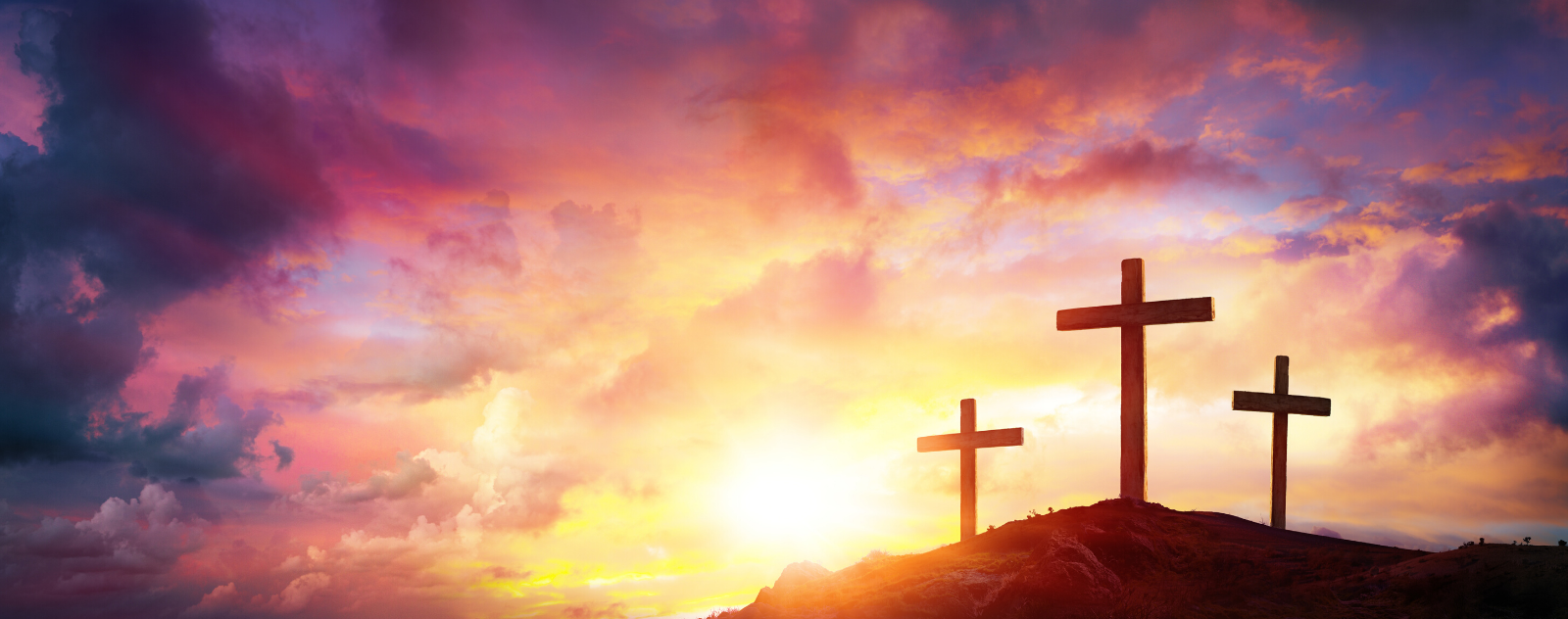
A movement that began within the Jewish world of the Roman empire some 2000 years ago surrounding a man often called Yeshua, yet is much more popularly known around the world today as Jesus. In short, he built an influential presence teaching his interpretations of Hebrew scriptures that led to challenging the order and authority of the priest class known as "Pharisees".
Many speculate on the more subtle details of who exactly was responsible, but nonetheless this internal strife between Jewish peoples led to Jesus being arrested by the Romans on charges of kingship.
Within the Empire, a contesting king would not be tolerated. And so, the man was sentenced to death via crucifixion, for being 'King of the Jews'.
Interestingly enough, some are not aware that crucifixion was not a special punishment delivered because he was Jesus. The Romans were very inventive, and thought it a nifty way to maximize someone's suffering before they crossed through deaths' door.
In the time before and after Jesus' sentence was carried out, countless others would endure the brutality of crucifixion.
As the spirit fades from his body, the true intrigue takes place. Rumor begins to circulate that he had risen from his tomb and began visiting followers.
And so with many, this certified the assumption that he was in fact according to Hebrew scripture, the Messiah. The Greek translation of Messiah is Khristós (Χριστός), anglicized as Christ.
Beginning the early days of the Christian world, namely led by the brother of Jesus, James and an important disciple, Peter.
The first instance of the Christian movement was actually happening exclusively inside the Jewish world, that is until Saul of Tarsus.
Now known affectionally as St. Paul, he claimed to have received a revelation from the risen Christ himself, instructing him to spread the teachings to everyone who would listen.
He accepted the mission and took it very serious - succeeding greatly in building new strongholds of the budding belief system.
This did not come without causing rifts between himself and the other leaders of the Jesus movement. What set Paul apart is that he never knew Jesus personally in his life, moving solely on his assertion of a divine revelation.
But the leaders who had personal connections to Jesus such as his brother James and disciple Peter would eventually confront Paul - believing he was taking things too far, converting non Jewish people without requirement of adopting Jewish customs.
For this they searched for his death, other members inside Jewish groups sought to eliminate Paul but he took refuge within the Roman legal system.
Ultimately, the conversion of the 'goy' or plural 'goys/goyim' (Hebrew word for non-Jew) is what would make the Paul sector of this new Christianity take shape and grow so quickly.
Gentile comes from the Latin word gentilis, meaning "of the same family or clan," which is derived from gens, meaning "clan" or "tribe." The term evolved within the Latin speaking Roman Catholicism to refer to non-Jewish nations and eventually became associated with any non-Jewish person.
Alas, the rift between Paulinian ideas and the personal followers of Jesus would sustain itself across generations. Early Christianity had become very real within the Roman Empire, but after a few centuries of competing ideas boiling into violent conflict it threatened to tear part of the Empire apart.
Constant infighting over the big question: Who was Jesus?
Producing a varying range of answers:
- A human prophet chosen by God
- A divine being wearing a human disguise
- A cosmic liberator from an evil creator
- A metaphysical paradox: fully God and fully man
The Nicene Creed
Enter Emperor Constantine.
The Nicene Creed was established by Emperor Constantine at the First Council of Nicaea in 325 AD to unify Christian beliefs and address theological disputes, particularly against the teachings of Arius. This creed affirmed the divinity of Jesus Christ and the concept of the Trinity, becoming a foundational statement for many Christian denominations.
The council was attended by about 300 bishops from across the Roman Empire, especially from the eastern provinces. Pope Sylvester I, was not present at the council, though he had two representatives. Constantine was also present at the council, and presided over it as an honorary president, but he left the direction of the theological debates to the ecclesiastical leaders.
The Nicene Creed, would defined orthodox, or “correct”, Christian belief. At the end of the council, Arianism was left with only three supporters, Arius himself, Theonas of Marmarica, and Secundus of Ptolemais. Arius’ teachings were declared as heretical, and his books burned. Arius himself was exiled by the emperor to Illyria.
And so Christianity was finally in agreement, at least for a little while.
The Great Schism
The relation of the Byzantine church to the Roman was one of growing estrangement from the 5th to the 11th century. In the early church three bishops stood forth prominently, principally from the political eminence of the cities in which they ruled—the bishops of Rome, Alexandria, and Antioch. The transfer of the seat of empire from Rome to Constantinople and the later eclipse of Alexandria and Antioch as battlegrounds of Islam and Christianity promoted the importance of Constantinople.
Concurrently, the theological calmness of the West, in contrast to the often violent theological disputes that troubled the Eastern patriarchates, strengthened the position of the Roman popes, who made increasing claims to preeminence. But this preeminence, or rather the Roman idea of what was involved in it, was never acknowledged in the East. To press it upon the Eastern patriarchs was to prepare the way for separation; to insist upon it in times of irritation was to cause a schism.
The Eastern theology had its roots in Greek philosophy, whereas a great deal of Western theology was based on Roman Law. This gave rise to misunderstandings and at last led to two widely separate ways of regarding and defining one important doctrine—the procession of the Holy Spirit from the Father or from the Father and the Son. The Roman churches, without consulting the East, added “and the Son” (Latin: Filioque) to the Nicene Creed. Also, the Eastern churches resented the Roman enforcement of clerical celibacy, the limitation of the right of confirmation to the bishop, and the use of unleavened bread in the Eucharist.
Political jealousies and interests intensified the disputes, and, at last, after many premonitory symptoms, the final break came in 1054, when Pope Leo IX struck at Michael Cerularius and his followers with an excommunication and the patriarch retaliated with a similar excommunication. There had been mutual excommunications before, but they had not resulted in permanent schisms. At the time there seemed possibilities of reconciliation, but the rift grew wider; in particular, the Greeks were bitterly antagonized by such events as the Latin capture of Constantinople in 1204. Western pleas for reunion (on Western terms), such as those at the Council of Lyon (1274) and the Council of Ferrara-Florence (1439), were rejected by the Byzantines.
Relations between the churches improved following the Second Vatican Council, and dialogue continues into the 21st century, although the schism has never healed.
The Protestant Reformation
The Protestant Reformation (1517-1648) refers to the widespread religious, cultural, and social upheaval of 16th-century Europe that broke the hold of the medieval Church, allowing for the development of personal interpretations of the Christian message and leading to the development of modern nation-states.
Final Verdict, Christianity Pros & Cons:
Christianity is hardly a blanket term, as the question will most always follow "what kind of Christian are you?" Even still, the faith undoubtedly has left it's mark on history and is still heavily practiced today, with over 2 Billion members of the religion, rivaled only by Islam.
Pros: their Sacred Text, The Holy Bible has the power to transform your life here & now. (if you understand what it is you're reading)
Cons: eternal infighting over theology - often excludes wisdom that predates the church - zero ethnic ties to people's cultural origins
- Buddhism
The Path of Enlightenment.
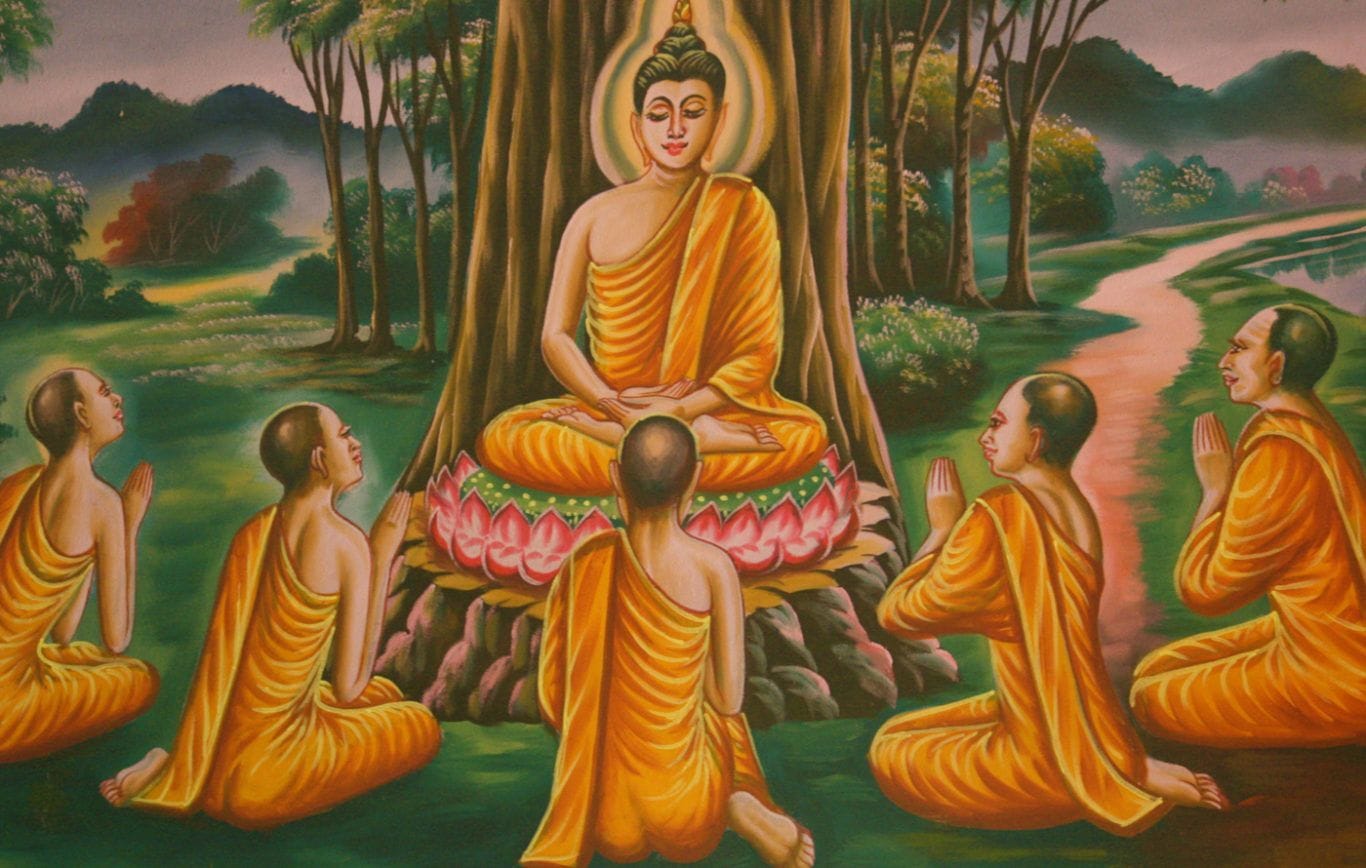
Buddhism is best understood not simply as a philosophy or a system of meditation, but as a family of religious traditions centered on the problem, causes, and possible liberation of suffering.
At its historical center stands Siddhārtha Gautama, the Buddha—“the Awakened One”—who most likely lived sometime around the 5th century BCE in northern India. His teaching developed into one of the great religious civilizations of Asia, eventually producing enormously diverse traditions across India, Sri Lanka, Southeast Asia, Tibet, China, Korea, Japan, and beyond.
Siddhārtha was born among the Śākya, an aristocratic warrior clan in the Himalayan foothills. He lived a privileged life but became deeply disturbed by the realities of aging, sickness, and death.
He eventually renounced his household life and became an ascetic, seeking an answer to the fundamental human problem.
After years of extreme asceticism, he rejected both luxurious indulgence and severe self-mortification. He pursued the Middle Way, meditated beneath the Bo tree, a sacred fig, and attained bodhi—awakening.
He then became the Buddha.
Important to acknowledge is that Buddhism begins not with a creator God revealing doctrine, but with a human being directly awakening to the structure of reality.
Over the vast span of time since the Buddha's life, his teachings and memory have shaped into institutions and doctrines of various shapes and forms that are widely disseminated to this day.
- Theravāda
- Mahāyāna
- Zen
- Vajrayāna
Several schools of thought exist within these disciplines. Just as there are many kinds of Christians, there are many kinds of Buddhists.
Final Verdict, Buddhism Pros & Cons:
The Middle Way of the Buddha is a noble path; yet I believe it's not difficult to conclude that over the thousands of years since his death the doctrines that formed Buddhism as a distinct way of life are by and large separated from the initial Buddha himself. Teachings are said to not have been recorded until centuries after his death. So I believe the man that became the Buddha was probably really awesome, yet Buddhism itself is far removed from his ways of being.
Pros: Guided structure on living a relatively peaceful life - worldwide resources to get in touch with the Sangha (community)
Cons: vast & layered theology that hardly anyone seems to believe in or care about, the focus is concerned with suffering itself and how to use meditation or philosophical discussion to liberate yourself from it - feels a lot like atheism but with an aesthetic peace driven vibe.
- Hinduism
The Eternal Dharma.
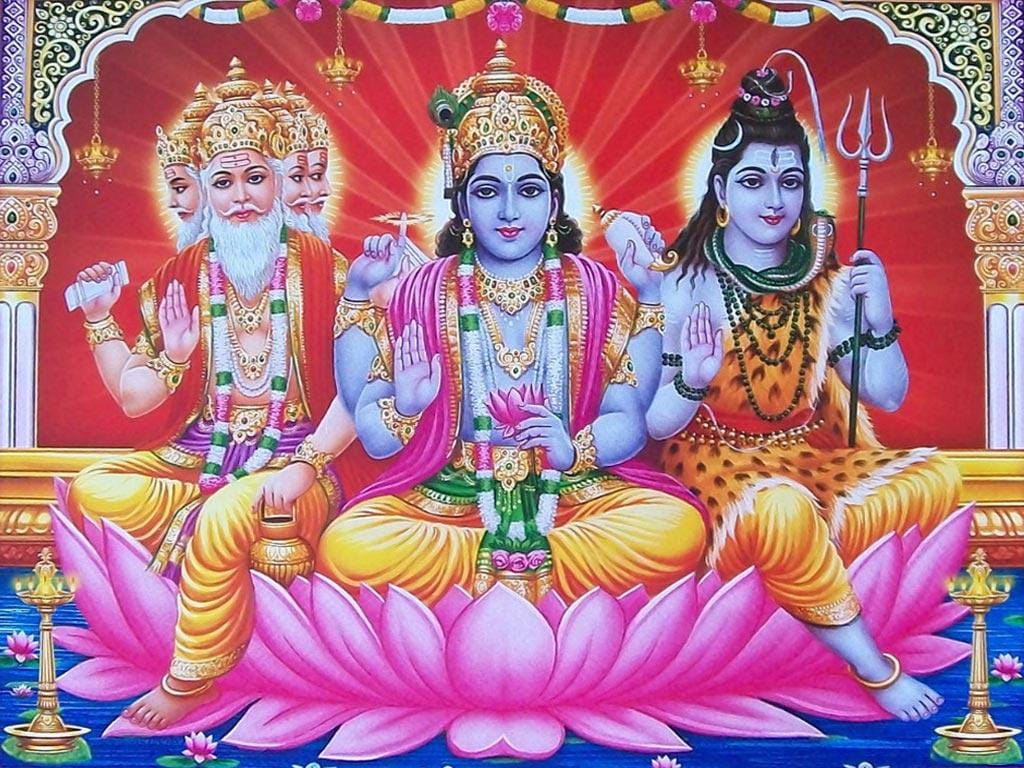
Brahman — ultimate reality
Brahman is the ultimate reality.
Different Hindu schools understand Brahman differently. It is often conceived as:
- impersonal and beyond attributes
- the absolute consciousness underlying existence
- the supreme personal God
- or the ultimate reality that manifests as the many gods and the cosmos.
Ātman — the Self
The individual possesses an ātman, translated as “Self.”
This is not personality or ego.
The body changes.
Thoughts change.
Emotions change.
Social identity changes.
Hindu philosophical traditions ask whether there is nevertheless a deeper, enduring Self beneath these changing phenomena.
Saṃsāra — the cycle of existence
Human beings exist within saṃsāra, a cycle of:
birth - life - death - rebirth - death - rebirth, and so on.
The individual does not live once.
Existence is understood as an enormous cycle extending across innumerable lifetimes.
Karma — action and consequence
Karma = action.
In Hindu thought, actions have consequences that extend beyond the immediate lifetime.
Karma operates within a large system involving:
- intention
- action
- duty
- moral causation
- rebirth
- cosmic order
- divine agency, depending upon the school.
Dharma — order, duty, and right living
Dharma is a very difficult Hindu concept to translate.
It can mean:
- duty
- righteousness
- moral order
- religious law
- proper conduct
- one's role
- the sustaining order of reality.
There isn't necessarily one universal duty for everyone.
A person's dharma may depend upon circumstances, stage of life, social role, family responsibilities, occupation, and spiritual development.
Act according to your dharma, but relinquish attachment to the fruits of your actions.
Mokṣa — liberation
The ultimate spiritual objective is mokṣa:
liberation from saṃsāra.
The liberated person is no longer bound by the cycle of karmic existence.
From Vedic religion to Hinduism
The oldest part of the Hindu tradition is the Vedas, truly ancient poetry passed down orally, originally in archaic Sanskrit.
Over time the transformation was from a religion about sacrifice and cosmic order into more of a philosophical questioning about the nature of reality and what exactly the self is and its relationship to consciousness.
The reality we ordinarily perceive is not the whole of reality, and the person we ordinarily believe ourselves to be is not necessarily the deepest truth of who we are.
That idea makes Hinduism one of the world's great civilizational traditions of metaphysics and spiritual practice, rather than a collection of stories about many gods.
Final Verdict, Hinduism Pros & Cons:
Often coined as the last remaining 'Pagan' religion still widely practiced throughout the modern times, it finds itself in stark contrast to most other beliefs of the world. Even so, like most traditions, the deeper towards the roots of the practice, the closer one comes to contact with the truth.
Pros: built upon the Vedic corpus, there is an ancient wisdom to be extracted for anyone who can reach to the foundations of the religion.
Cons: convoluted religious practice - Hindu traditions are not the Vedic ones - current Hindu world has no ground to stand on with claims their faith can produce a functional society or beautiful way of living.
- Islam
Mohammed's new idea.
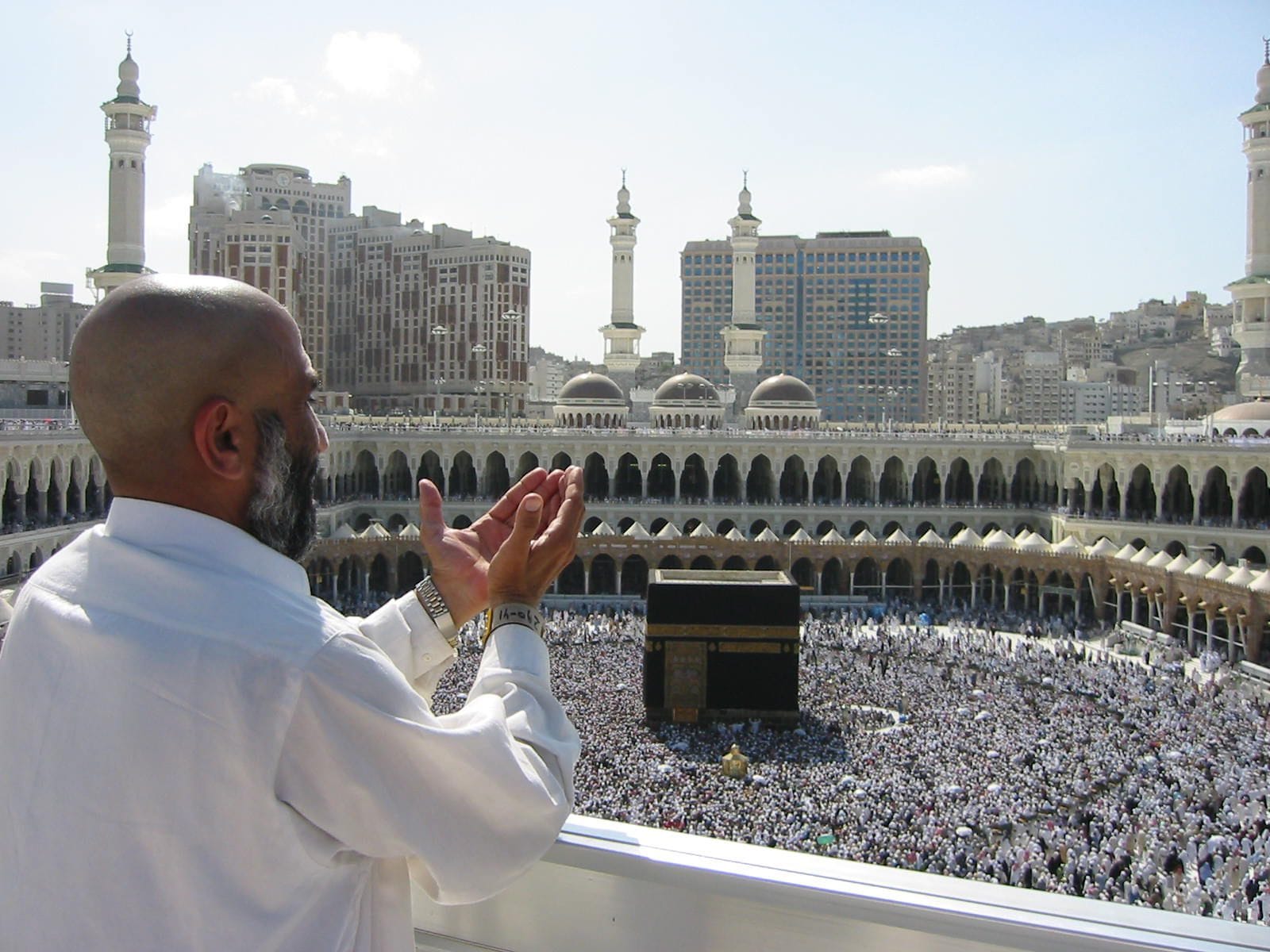
Emerging in 7th-century Arabia, the Arabic word islām is related to the root s-l-m, associated with submission, peace, and wholeness.
A Muslim is therefore, in the basic theological sense, one who submits to God.
Central idea: God is absolutely one
At the heart of Islam is tawḥīd — the absolute oneness and uniqueness of God.
God is Allah (Arabic: الله), literally "the God." Arabic-speaking Christians also use Allah for God; the term itself does not designate a different deity.
Islam's conception of God is uncompromisingly monotheistic:
- God is one.
- God has no partners.
- God has no offspring.
- God is neither born nor does He die.
- Nothing is comparable to Him.
- He is creator rather than part of creation.
- Human beings worship Him but cannot become Him.
Islam sees itself as the restoration of primordial religion
One of the most interesting things about Islam historically is that Muslims generally do not understand Islam as a completely new religion beginning with Muhammad.
Rather, Islam presents itself as the restoration and completion of an ancient primordial religion:
Adam, Noah, Abraham, Moses, David, Solomon, Jesus, Muhammad.
Muhammad is therefore not regarded as inventing a new theology.
He is the final prophet in a long chain of divine messengers.
Islam regards Abraham as a primordial monotheist — a ḥanīf — who worshipped the one God before the emergence of Judaism and Christianity as historically distinct communities.
Thus Muslims often understand themselves as heirs to the religion of Abraham.
Muhammad
Muhammad ibn ʿAbd Allāh was born in approximately 570 CE in Mecca, in western Arabia.
He belonged to the Quraysh tribe, an important Meccan tribal confederation.
According to Islamic tradition, Muhammad was deeply disturbed by the religious and social conditions surrounding him: polytheism, tribal conflict, exploitation of the vulnerable, and social inequality.
Around the age of 40, while retreating for meditation in a cave on Mount Hira, he experienced his first revelation.
These revelations continued for over 20 years, eventually becoming the Qur'an.
Muhammad's preaching eventually brought him into conflict with the ruling elite of Mecca.
The early Muslim community experienced persecution.
In 622 CE, Muhammad and his followers migrated from Mecca to Medina.
This event is called the Hijra and is so important that it begins the Islamic calendar.
Muhammad became not merely a religious preacher but also:
- political leader
- judge
- military commander
- diplomat
- lawgiver
- community organizer
The community established at Medina became the nucleus of the emerging Muslim ummah — the community of believers.
Muhammad eventually returned to Mecca and established Islam as the dominant religious order of much of Arabia.
He died in 632 CE.
By the time of his death, much of the Arabian Peninsula had entered into alliance with or accepted the new Muslim polity.
The Qur'an
The Qur'an (al-Qurʾān) is Islam's central scripture.
Muslims believe it is not merely inspired by God but is the direct revealed speech of God, revealed in Arabic to Muhammad.
This distinction matters.
In Christianity, the Bible is generally understood as divinely inspired writings produced through human authors.
Islam has a much stronger doctrine of Qur'anic verbal revelation.
The Qur'an is therefore fundamentally an Arabic revelation.
Translations are generally regarded as interpretations or translations of the Qur'an rather than the Qur'an itself in the fullest theological sense.
The Qur'an contains:
- theology
- stories of prophets
- moral instruction
- legal principles
- eschatology
- prayers
- social regulations
- reflections upon creation
- warnings and promises
It consists of 114 surahs (chapters).
They are not arranged chronologically.
The second source: Sunnah
Islam is not based on the Qur'an alone.
The second major source is the Sunnah, the example and practice of Muhammad.
The Sunnah is preserved principally through hadith — reports concerning Muhammad's:
- sayings
- actions
- decisions
- approvals
- practices
Muslim scholars developed extraordinarily sophisticated methods for determining the reliability of hadith.
A hadith traditionally consists of:
isnād: the chain of transmitters
and
matn: the actual report/text
Hadith scholarship became an enormous intellectual discipline.
The Qur'an and Sunnah together provide the foundation for Islamic theology, ethics, ritual and law.
Islamic law: Sharīʿah
Sharīʿah literally relates to a path or way.
It refers broadly to the divinely oriented way of life Muslims seek to follow.
Islamic jurisprudence is called fiqh.
This distinction is important:
Sharīʿah = divine ideal
Fiqh = human scholarly interpretation of that ideal
Classical Sunni Islam developed four major legal schools:
- Ḥanafī
- Mālikī
- Shāfiʿī
- Ḥanbalī
Shi'a Islam developed its own jurisprudential traditions, particularly the Jaʿfarī school.
Islamic law traditionally encompasses much more than criminal law.
It concerns:
- marriage
- divorce
- inheritance
- contracts
- commerce
- charity
- diet
- prayer
- ritual purity
- family relationships
- ethics
- governance
Sunni and Shi'a Islam
One cannot properly understand Islam without understanding its principal historical division.
The division began partly with the question:
Who should lead the Muslim community after Muhammad's death?
Sunni position
The Sunni tradition ultimately accepted the early caliphs:
Abu Bakr - Umar - Uthman - Ali
as the Rāshidūn, the "Rightly Guided Caliphs."
Shi'a position
Shi'a Muslims hold that Muhammad designated or indicated Ali ibn Abi Talib, his cousin and son-in-law, as the rightful successor and spiritual leader.
Ali's descendants therefore possess a special religious authority.
The two traditions subsequently developed distinct:
- theological traditions
- hadith collections
- jurisprudence
- institutions
- religious authorities
The martyrdom of Husayn ibn Ali, Muhammad's grandson, at Karbala in 680 CE became foundational to Shi'a religious memory.
The event remains especially important during ʿĀshūrāʾ.
Sufism.
Sufism is the mystical dimension of Islam.
The Sufi seeks not merely to know about God but to experience profound proximity to God.
Practices can include:
- dhikr — remembrance of God
- meditation
- chanting
- poetry
- spiritual mentorship
- ascetic discipline
- contemplation
Islam's expansion
Within a century of Muhammad's death, Islamic rule had expanded dramatically.
The early caliphates spread across:
Arabia, Syria, Palestine, Egypt, Persia, North Africa, Iberia.
and eastward into:
Central Asia, Afghanistan, parts of the Indian subcontinent.
Islam spread far via military conquest.
Merchants, scholars, missionaries and Sufi orders also carried Islam into:
- West Africa
- East Africa
- Central Asia
- India
- Southeast Asia
- China
This is why Islam today claims it is not fundamentally an "Arab religion."
The largest Muslim populations are found in countries such as:
Indonesia, Pakistan, India, Bangladesh, Nigeria and other non-Arab societies.
Arab Muslims represent a portion of the world's Muslims.
Islam and warfare
The Qur'an contains passages concerning:
- warfare
- self-defense
- treaties
- enemies
- rebellion
- persecution
Islamic history consequently developed an extensive law of war.
The word jihād literally means "striving" or "struggle."
It can refer to striving in the spiritual and moral sense, and it can also refer to armed struggle under particular circumstances.
A popular equation:
jihād = "holy war"
is an oversimplification.
At the same time, Islamic civilization unquestionably developed traditions of armed jihad and territorial warfare.
Final Verdict, Islam Pros & Cons:
While the fastest "growing" religion in the world and currently the only one that can contest the sheer numbers Christianity also bolsters, Islam carries with it a reputation it has earned, regardless of the propaganda made to lighten the mood surrounding any particular sector. Undoubtedly the Muslims are perhaps the most fervent believers of their faith; understand that when they show up in your neighborhood, they're more interested in you joining the Mosque than they are in becoming apart of the pre-existing community.
Pros: Insulated community, a child can be born, schooled, live work marry & die all inside a Muslim functioning society - Sufism, there is still a way to come into contact with the mysteries of this universe via Sufi knowledge.
Cons: Submission, strict adherence to dogmatic nonsense - oppression of women and girls as if they are livestock - denying the divine nature of humanity
- Secularism
As the famous line from Frederick Nietzsche goes:
God is dead.
And it is we who have killed him.
Now, understand that a simple unbelief is something does not negate its existence.
But it will drastically impact the perceived experience of a person.
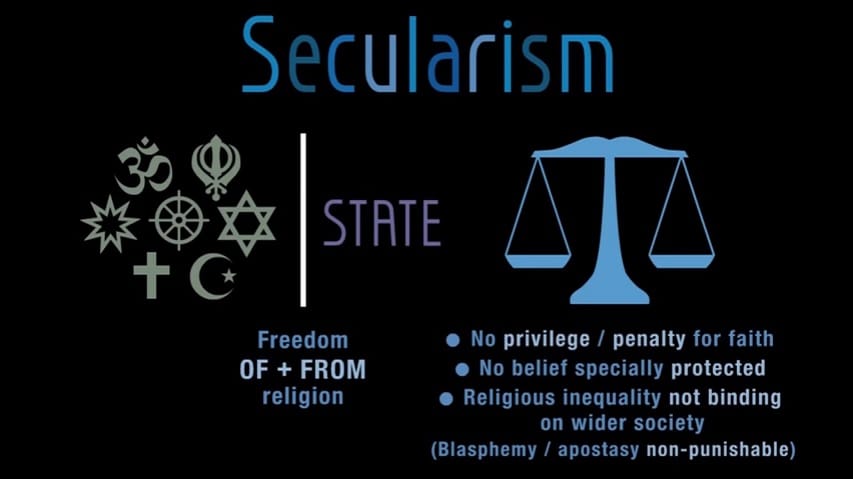
One of the most consequential ideas in the history of civilization - it is not (supposedly) the absence of religion. Secularism is a way of organizing the relationship between truth, authority, society, and the sacred.
The word comes ultimately from the Latin saeculum, meaning roughly the age, the worldly era, the present world.
That which belongs to the temporal/worldly order rather than the sacred/ecclesiastical order.
Modern secularism has transformed into the organization of public life without requiring theological authority as its foundation.
In the truest loyalty to the paradoxical nature of our Universe, the attempt to remove religion from the mainframe created a religion in of itself.
Problem being this new doctrine has no divine origins, dismisses truth for political & state means, and ordained a new priest class of "experts".
The "secular religion"
Sacred principles
Human rights, equality, freedom, nation, revolution, etc.
Saints/heroes
Founders, martyrs, revolutionaries, civil-rights leaders, scientists.
Scriptures
Constitutions, manifestos, foundational texts.
Rituals
Elections, inaugurations, commemorations, national ceremonies.
Temples
Parliaments, universities, museums, monuments.
Priesthoods
Intellectuals, academics, political elites, ideological institutions.
Eschatology
A future perfected society.
Heresy
Ideas considered beyond acceptable boundaries.
Excommunication
Social ostracism.
Dare not question the virtues and excellency of the Holy Democracy, for our experts in white lab coats have concluded it is indeed the best and truest form of governance for freedom, for all.
Science cannot tell you what you ought to value
The almighty science can come to endless conclusions, some based on empirical evidence and fact, others purely theory or hypothesis.
Yet it has no place of teaching a person of what matters in this experience; it can provide understanding, but not values.
Even so there are substantial cases that shows how "science" has become compromised to the political agendas of the modern age.
If you are to make an assertion no matter how much evidence supports it in contrary to the popular narrative: risk losing all funding and credibility.
Secularism, power of the mob.
Christianity & Secularism
Consider concepts deeply embedded in modern Western morality:
- universal human equality
- care for the weak
- protection of children
- dignity of the individual
- universal moral obligation
- charity
- forgiveness
- condemnation of cruelty
The particular historical synthesis through which these concepts became central to Western civilization is deeply intertwined with Christianity.
It is palpably ironic that the most devout secularists are in stark opposition to the Christian viewpoints and way of life, yet their entire fundamental framework of how they see the world is built upon a Christian foundation that precedes it.
Perhaps an even greater irony:
Christianity helped create the intellectual conditions under which secularism could emerge.
Christianity desacralized nature: the sun, moon, rivers, animals, and planets were just part of creation, no longer gods.
Making nature something that could be investigated.
Christianity also emphasized the rationality and intelligibility of creation.
The universe was not fundamentally chaos.
It possessed Logos.
Then Western civilization increasingly investigated that rational creation.
Secularism as neutrality
The state shouldn't force theology upon citizens.
Sure old religions are not required to be believed by your nation, yet there seems a new, subtle worldview everyone is expected to adhere to.
So did the secularists successfully separate church from state? Or did they turn the State into the New Church?
Secularism didn't replace religion. It separated functions of religion, redistributed them among the state, science, philosophy, economics, education, and the individual—only to discover that human beings still require answers to the religious questions of meaning, morality, identity, transcendence, and ultimate purpose.
Final Verdict, Secularism Pros & Cons:
The attempt to remove religion from everyday life has resulted in the modernity currently crushing countless souls to this day. And paradoxically, created a religion of its own.
If an old religion supports something, you denounce it. If something calls for tradition, you screech for progress. The inversion of good and evil.
Pros: if you love degeneracy it doesn't get better than this.
Cons: the banishment of all things sacred, loss of ancestral continuity, decency is seen as limitation or oppression.
Conclusion:
Religion is the attempted expression of truth.
The individual, community, and nation will hardly prosper without it.
None of the above do I subscribe to, but I believe something greater is being born out of the current strife.
There is a universal truth at the center of all things, and most often that is where religion begins - just don't get lost in the institutional dogma along the way.
He who seeks, finds.