The Origin of Valentines Day

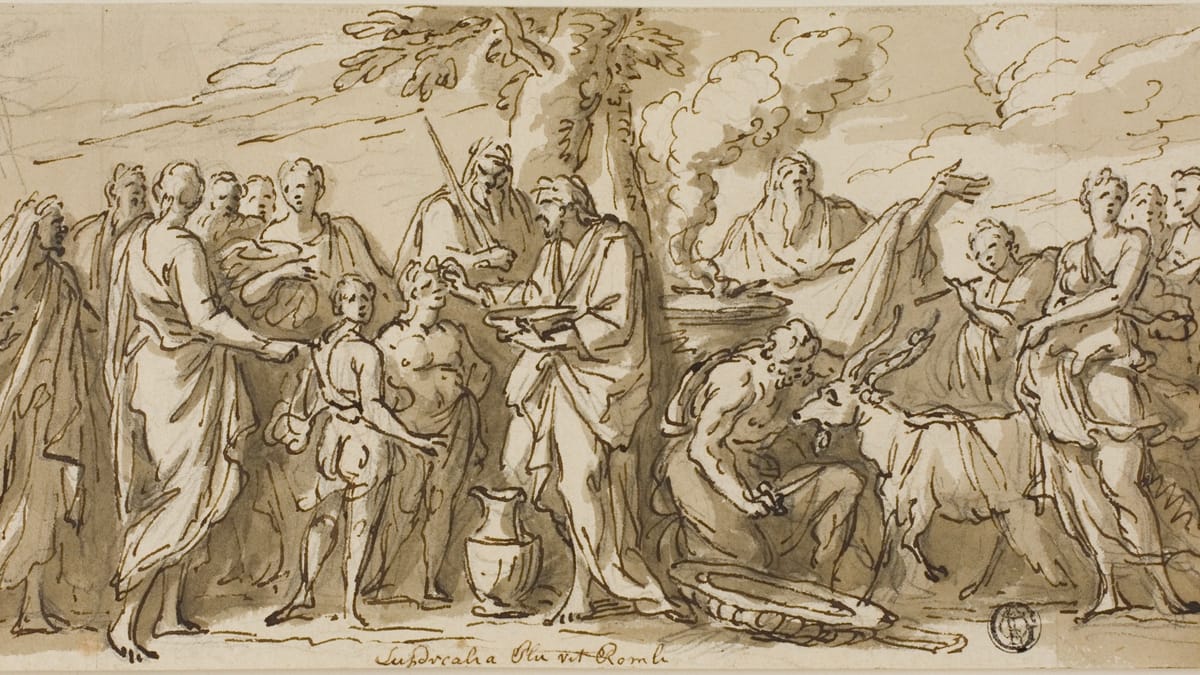
Before gifting flowers, boxed chocolate, and a note professing your affection, there was a festival - an ancient festival, with roots in the founding of Rome itself.
Lupercalia was a festival held every year in Rome on February 15, a celebration meant to be a ceremony of purification and fertility.
Rome was founded in 753 B.C. and the festival has been traced back nearly to that exact point in time. According to Roman legend, the ancient King Amulius ordered his twin nephews name Romulus and Remus to be thrown into the Tiber River to drown in retribution for their mother's broken vow of celibacy. A servant woman taking pity upon them, placed them inside a basket on the river instead. The river-god carried the basket and the brothers downriver to a wild fig tree where the boys in the basket became caught in the branches. A she-wolf rescued and cared for the brothers in a den at the base of Palatine Hill.
The twins were later adopted by a shepherd and his wife and learned their father's trade. They took swift action to kill the uncle that ordered their death, afterwards they found the cave den of the she-wolf who had nurtured them and named in Lupercal. The brothers then decided to build the city of Rome on Palatine Hill.
It's thought Lupercalia took place to honor the she-wolf and please Lupercus, the Roman God of shepherds and fertility.
Lupercalia began at Lupercal cave with the sacrifice of male goats (representing sexuality) and a dog (annoyance of the wolf). A group of Roman priests known as Luperci performed the sacrifices. Afterward, the foreheads of two essentially naked Luperci were smeared with the animals' blood using the bloody sacrificial knife. the blood was then removed with a piece of milk-soaked wool as the two other Luperci laughed.
At this time, the Vestal Virgins also presented offerings of mola salsa (salted cakes) made with the first grain of the harvest.
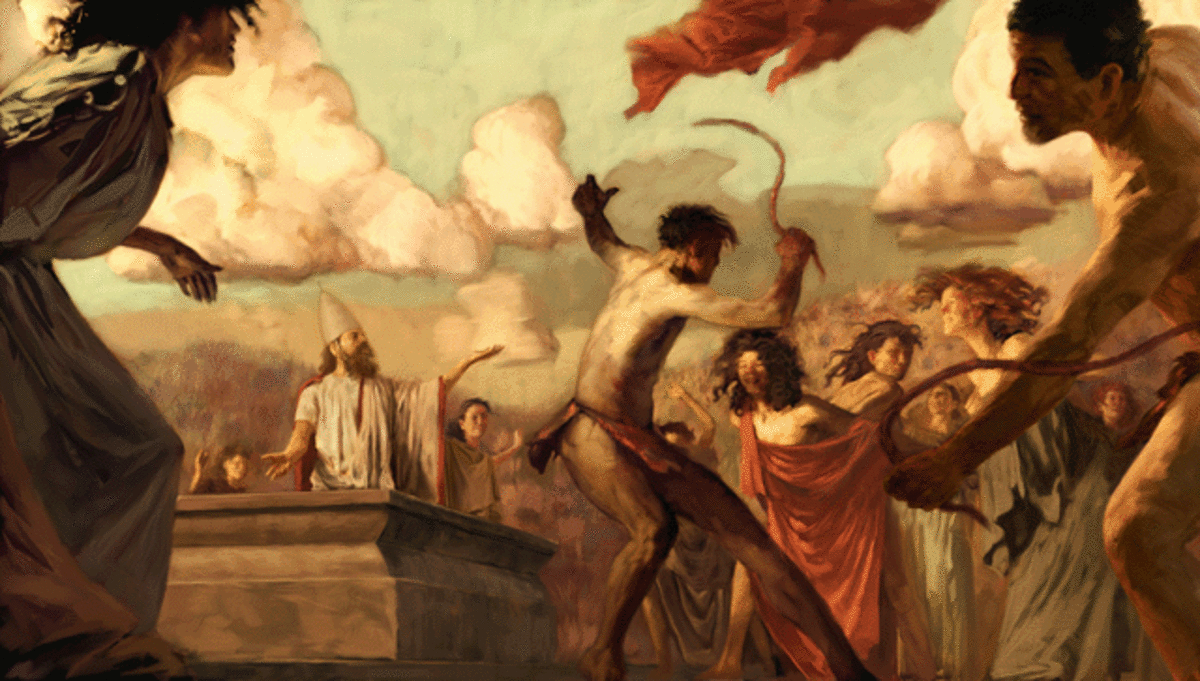
After the ritual sacrifice, feasting began. Once the feast of Lupercal was over, the Luperci cut strips of hide from the sacrificed goats called februa, and ran around Palatine Hill whipping anyone within striking distance with the februa. The Romans believed these strikes would purify recipients by dispelling evil spirits. Several women sought to be whipped during this as for a women to be struck by the februa was to be made fertile and encourage healthy childbirth.
Julius Caesar and the Lupercalia
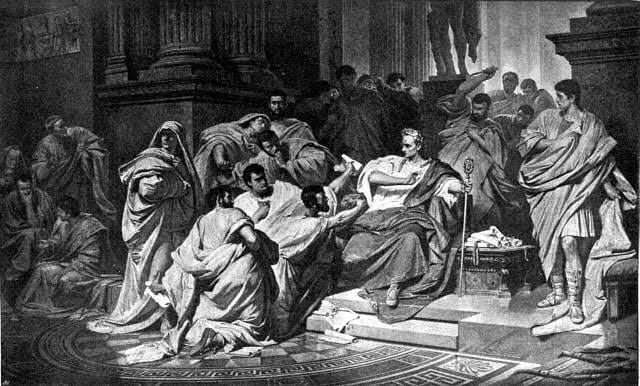
Was the great would be Emperor of Rome ever involved in a Lupercalia festival? Absolutely. This is the widely famous moment of Caesar refusing the golden diadem written about by William Shakespeare in his play 'Julius Caesar'.
In the year 44 BC, Mark Antony was one of the runners racing around Palatine Hill. After he had dashed into the forum as the crowd made way for him, he carried a golden diadem around which a wreath of laurel was tied, and held it out to Caesar. There was slight and preconcerted applause, but when Caesar pushed the diadem away everyone up roared in joy. Antony offered again, Caesar refused again and the people once more applauded in an up roar. Caesar rose from his seat and ordered the wreath to be carried up to the Capitol.
Many speculate this was Caesar's way of showing he did not want to become king. Although it would not be enough, for he was assassinated exactly one month later.
The End of Lupercalia
Beginning in the 4th century A.D. the Christian leaders in Rome sought to expel and outlaw all ancient rites and traditions. Even through the persecution, Lupercalia festivals continued to be held for mor than a century.
Around the year 494 A.D., Pope Gelasius I eliminated Lupercalia entirely. Only two years later in 496, most likely due to the popularity of the festival and people wanting to continue with tradition Gelasius established St. Valentine's Day. The feast was held on February 14th to honor the martyred Christian saint.
Legacy of St. Valentine
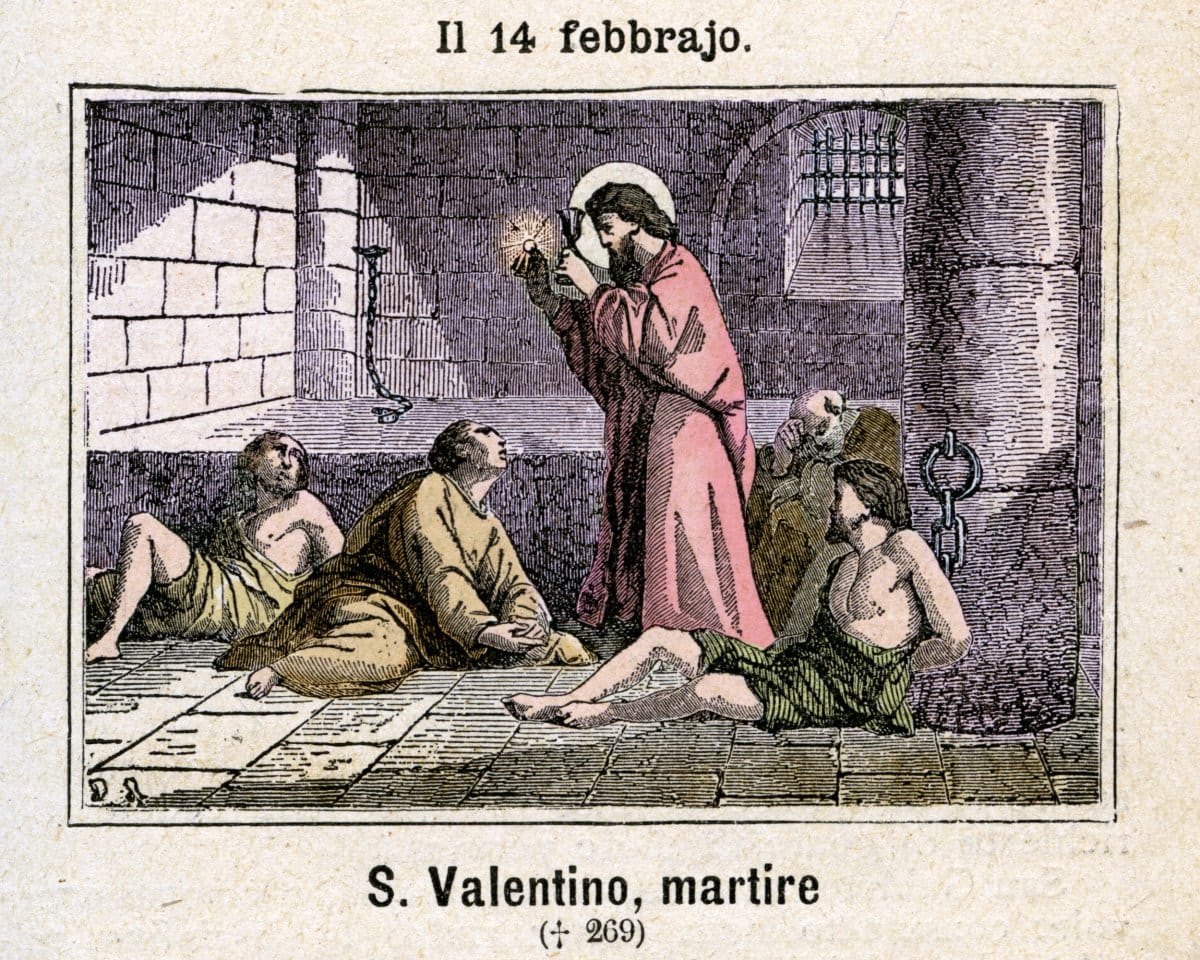
The story goes that on one February 14th during the 3rd century A.D. a man named Valentine was executed by order of Roman Emperor Claudius II. The Christian priest was imprisoned for assisting persecuted Christians and secretly marrying couples who were in love.
During Valentine's imprisonment, he tried converting Claudius to Christianity. Claudius became enraged and ordered Valentine to reject his faith or be killed. He refused to forsake his faith, so Valentine was beheaded.
Legend also tells of another story that happened during Valentine's imprisonment after he tutored a girl named Julia, the blind daughter of his jailer. The legend states God restored Julia's sight after she and Valentine prayed together. On the eve of his execution, Valentine supposedly penned a note to Julia and signed it, "From your Valentine."
A modern, commercialized holiday; rooted deep in people's mythological identity and the founding one of the most powerful empires to ever rise. With people recognizing the emptiness of just buying things, perhaps it is time to return to the sacred..